After Dark, Take It Steady: Winter Pavement Wisdom for Everyday Walks
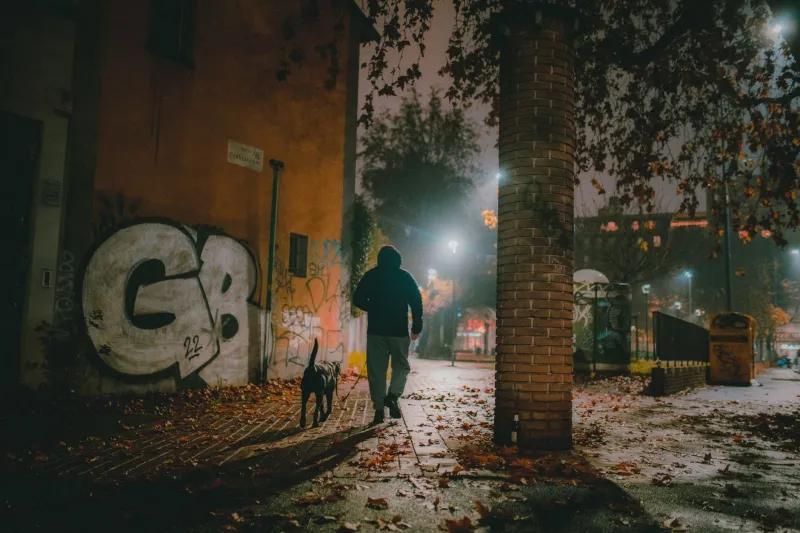
There is a particular kind of UK winter walk that catches almost everyone out. It is not a hike up a fell or a long countryside ramble. It is the ten-minute trip to the shop, the bus stop or the school gate, done in the dark, in a coat you have owned for years, on a pavement that looked perfectly ordinary this morning.
By the time you notice the wet leaves, you are already halfway across them. By the time you spot the black ice, your foot is on it. And the street light that looked reassuring from your kitchen window turns out to have a generous halo of shadow around it.
The aim here is not to make you afraid of your own street. Walking is one of the simplest things you can do for your health, and it should not stop just because the sun clocks off early. But a few small adjustments can make winter walks feel a lot less like a test of nerve.
Make yourself easier to see
In winter, visibility is not about looking dramatic. It is about giving drivers, cyclists and other walkers a fair chance to notice you. A dark coat and a dark evening are a difficult combination, especially in rain.
You do not need to dress like a road worker. A reflective strip on your bag, a lightweight reflective band on your wrist or ankle, or a small clip-on light can make a surprising difference. If you are walking along an unlit stretch, a small torch or your phone light is useful, but keep it pointed at the pavement ahead rather than shining it into oncoming eyes.
Cross at places where you are actually visible. That might mean walking an extra minute to a proper crossing rather than stepping out between parked cars. It is boring advice, but boring advice is often the kind that keeps you upright.
Give your shoes a proper job
Winter pavements ask more of footwear than summer ones. Smooth soles and wet leaves are not friends. nor are deep treads that have worn flat over a couple of years of daily wear.
You do not need specialist walking boots for the school run. A pair of shoes or trainers with a decent tread, a firm hold around the heel and a little room for thicker socks will do more than you might think. Waterproofing is a bonus, but grip matters more than staying perfectly dry.
If conditions are genuinely icy, removable slip-on grips can help on compacted snow or ice, but they need care. Take them off before you go into a shop or onto smooth indoor floors, where they can be more dangerous than helpful. And if your everyday shoes are worn smooth, this is a good month to admit it.
Choose the boring route sometimes
There is a time for the pretty shortcut through the park and a time for the well-lit main road. In winter, after rain or a cold snap, the main road often wins.
Main routes tend to be busier, better lit and more likely to have been gritted. Councils prioritise key roads and pavements, but side streets, alleyways and cut-throughs can stay untreated for longer. Wet leaves collect at kerbs, on slopes and under trees. Puddles can hide cracks, raised paving stones or drain covers that are slicker than they look.
If you are walking somewhere unfamiliar, give someone a rough idea of your route and expected time. It sounds fussy for a twenty-minute walk, but it is a small habit that costs nothing. And if the weather turns properly grim, there is no shame in taking the bus for one leg of the journey.
Walk like the pavement is talking to you
When surfaces are slick, shorter steps are safer than long strides. Keep your weight over your feet rather than leaning forward. Take corners more slowly. Give yourself room at kerbs, crossings and painted road markings, which can be surprisingly slippery when wet.
Wet leaves are their own particular hazard. They are not just decoration. A thick layer of them can hide uneven ground and become a soft, sliding surface, especially on a slope. Black ice is harder still because it does not announce itself. If the forecast suggests ice, assume shaded patches, bridges and side streets may be worse than the main road.
Try not to rush. Rushing is often what turns a minor slip into a fall. Leave a few minutes earlier, keep your hands free where you can, and save the phone call for when you are standing still. If you listen to music or a podcast, keeping one ear free is a sensible compromise.
If you do go over
Most winter tumbles are minor, but they can shake you up. If you fall, take a moment before leaping up. Check how you feel, whether you can move everything normally and whether anything hurts sharply. If you have hit your head, cannot put weight on a leg or arm, or feel very unwell, seek help. Call 999 if it is an emergency, or use NHS 111 for advice if you are unsure.
If you are in the road, try to get to a safe place before sorting yourself out, and accept help if someone offers it. Once home, rest, check for swelling or bruising, and keep an eye on how you feel over the next day or so. A pharmacist can advise on minor aches and pains, and your GP can help if something is not settling.
A little preparation goes a long way
You do not need a survival kit for a walk to the corner shop. A charged phone, a small torch, something reflective and shoes with grip cover most of it. A warm pair of gloves helps too, not least because cold hands make every stumble feel worse.
The point is not to turn every evening walk into a risk assessment. It is to make the usual winter conditions less likely to catch you out. Keep your route sensible, your pace steady and your expectations realistic. Then put your coat on and go. Your street is still worth walking, even after dark.