Twenty Minutes, One Chair: What Really Happens at an NHS Health Check
Some invitations are easy to ignore. A free check-up you did not ask for, arriving in a plain envelope from the surgery, is a classic one to slide under the takeaway menus and forget about.
Which is a shame, because the NHS Health Check is one of the least dramatic, most useful things you can do for yourself this winter. No needles you have to brace for (usually), no fasting, no being told off. Just a chair, a cuff on your arm and a chat.
Here is the honest version of what happens, so nothing in the room takes you by surprise.
Who gets the letter, and who doesn't
In England, the check is offered to adults aged 40 to 74 who don't already have a relevant condition, roughly once every five years. It's commissioned by your local authority and usually delivered through your GP surgery or a nearby community setting. It's free, and it isn't a reward or a punishment — everyone in that age band gets invited, working or not, healthy or not.
You won't be invited if you already have heart disease, diabetes, kidney disease, high blood pressure, or you've had a stroke. That's not you being excluded — it's because those conditions are already being monitored properly, and a general check would just duplicate work.
If you're 40-plus and can't remember ever having one, it's worth ringing reception and asking whether you're due. Records get lost, letters get binned, house moves happen.
What actually happens in the room
Expect to be in and out in around 20 to 30 minutes. Depending on the surgery, some of it might be done by a healthcare assistant, a nurse or a pharmacist. The core bits look like this:
- Height and weight, which become your BMI. Some places also measure your waist, because where you carry weight matters as well as how much.
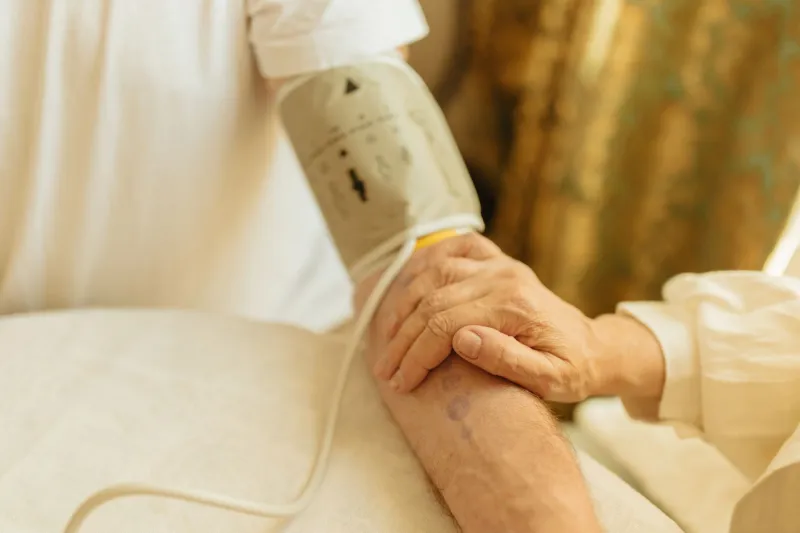
- Blood pressure, taken sitting down with the cuff on your upper arm. One reading that's a bit high is not a diagnosis — it's a reason to check again.
- A cholesterol test, often a finger-prick test read on a little machine in the room. You normally don't need to fast, which is a relief if you've been avoiding breakfast on the way in.
- A type 2 diabetes risk score, which is often worked out from a questionnaire rather than a blood sample. Some areas do a blood test as well.
- A cardiovascular risk score — often called QRISK — which combines your age, sex, ethnicity, smoking status, blood pressure, cholesterol and family history into a rough ten-year percentage risk of a heart attack or stroke.
- A lifestyle conversation covering smoking, alcohol, activity and food, plus a chat about dementia awareness and where to get support if memory is a worry.
Some surgeries add a bit more, some a bit less. It's not a full medical, and it won't pick up everything — think of it as a useful snapshot rather than a full service.
The bit that feels like a quiz
This is the part people find awkward: the questions. How many units do you drink in a typical week? How many days do you do something that gets you slightly out of breath? What's your family history — any heart attacks in parents or siblings, and roughly what age?
It can feel like being back in a classroom with your hand hovering over an answer. It isn't. Nobody is writing down 'naughty' in the margin, and the results are only useful if the answers are honest. Half a bottle of wine on a Friday that you round down to two glasses is only fooling the spreadsheet, not your arteries.
If you'd rather not do mental arithmetic under pressure, jot your answers down beforehand. That alone makes the appointment feel twice as relaxed.
A five-minute prep list
You don't need to do much, but a tiny bit of homework makes the conversation sharper:
- Bring a list of your medicines, including anything you buy regularly over the counter, plus any supplements.
- Note your family history — heart disease, stroke, diabetes, high blood pressure, and the ages it happened.
- Bring any home readings if you've been monitoring your blood pressure yourself.
- Rough figures for drink and activity, so you're not guessing on the spot.
- Write down two questions you want answered. They always evaporate in the room.
- Wear a short or loose sleeve, so the cuff fits without a wrestle.
- Ask about fasting when you book — most places don't need it, but a quick check saves an uncomfortable morning.
And if work is the obstacle, ask about early or late slots when you book. Most employers are perfectly reasonable about a 30-minute health appointment, especially with a letter in hand.
What the numbers do and don't mean
Here's the reassuring part: almost nothing at a Health Check is a diagnosis on its own.
A ten-year risk score of, say, 12% does not mean a heart attack is booked in. It means that if you lined up 100 people who look like you on paper, roughly 12 might have a heart event in the next decade. That leaves 88 who don't — and the whole point of the appointment is nudging that number in your favour.
A single high blood pressure reading might mean nothing more than nerves and a rushed walk from the car park. It might mean a follow-up: a repeat check, or a 24-hour monitor that measures your pressure as you go about your day. A cholesterol result might lead to a conversation about statins, which is a discussion, not a decree — you're allowed to ask about side effects, alternatives and whether it's worth it for you.
Some results come back normal, some come with 'let's recheck in three months', and some come with a referral to a stop-smoking service, a weight management programme or a blood test. Ask for a printout of your numbers and, crucially, ask: what would make the biggest difference over the next three months?
If you're in Scotland, Wales or Northern Ireland
England runs the national programme, but the other nations are not identical, and it's worth knowing before you wait for a letter that isn't coming:
- Scotland has no England-style universal check for all 40 to 74-year-olds. Some health boards run local checks and Keep Well-style programmes, so ask your GP practice or health board what's available where you live.
- Wales has checks offered in some areas through local health boards and community settings, but provision varies. Your GP reception is the quickest route to finding out.
- Northern Ireland doesn't have a national programme along the same lines. Some practices offer checks for patients over 40, so ask what's on offer locally.
Wherever you are, community pharmacies across the UK offer free blood pressure checks and can advise on stop-smoking support and minor ailments. It's a decent back-up if a full check isn't available near you.
The bit worth remembering
Twenty minutes of your afternoon, once every five years, is a small ask. The aim isn't to frighten you — it's to spot the quiet stuff, the blood pressure creeping up and the cholesterol drifting, at a point when small changes actually do something.
If the letter is somewhere under the takeaway menus, dig it out. If it never arrived, ring the surgery and ask whether you're due. And if the whole idea makes you anxious, say so when you book — the staff have heard it before, and they'll talk you through it.
This is general information, not personal medical advice. If you're worried about a specific symptom or result, speak to your GP or pharmacist.