Before You Panic-Dial: A Practical Map of NHS Urgent Care

It is 8.17pm on a wet Tuesday. Someone in your house has a temperature, a sore side, or a cough that suddenly sounds worse. You are standing in the kitchen with your phone in one hand and a half-made cup of tea in the other, wondering whether this is a wait-until-morning situation or a call-someone-now situation.
That moment does not need a medical degree. It needs a bit of calm and a rough map of who does what. Not a giant flowchart. Just enough to stop you panic-dialling the wrong door.
Start with one question: is this immediately life-threatening?
Before you worry about which number to ring, ask yourself the blunt question: does this feel like an emergency right now?
Call 999 if someone is struggling to breathe, has crushing chest pain, is unconscious, has severe bleeding that will not stop, has sudden face or limb weakness, slurred speech or a drooping face, has a seizure that will not stop, or has a severe allergic reaction with swelling or breathing trouble. If someone has taken an overdose or is at immediate risk of harming themselves or someone else, that is also a 999 moment.
You will not be told off for calling 999 when you genuinely fear for someone's life. That is what it is for. Do not drive someone to A&E yourself if they are seriously unwell; wait for the ambulance crew who can start helping on the way.
If it is not obviously life-threatening but you are worried and cannot wait for a GP appointment, the next question is: what kind of help does this need tonight?
NHS 111: the sensible middle ground
NHS 111 is for urgent medical problems that are not life-threatening. Think: a worsening cough, a possible infection, a child with a temperature that is not settling, a new rash, abdominal pain that is worrying you, or a medication question that cannot wait until the pharmacy opens.
You can use NHS 111 online or ring 111. The online route is quick for many adults and children over five, but ringing is fine if you are unsure, looking after someone else, or the online questions do not fit. NHS 111 can give advice, arrange a call-back from a nurse or doctor, or point you towards an urgent treatment centre.
Urgent treatment centres: the in-between option
Urgent treatment centres, sometimes called UTCs or minor injury units, sit between a pharmacy and A&E. They are set up for things like sprains, minor cuts, suspected broken bones, minor burns, and infections that need a proper look but are not emergencies.
They are not the place for chest pain, severe breathing problems, or a sudden collapse. If you are not sure, ring 111 first and let them direct you. Some UTCs take walk-ins; others work better with a booked slot. A two-minute call can save you a pointless trip across town.
The pharmacy down the road does more than you think
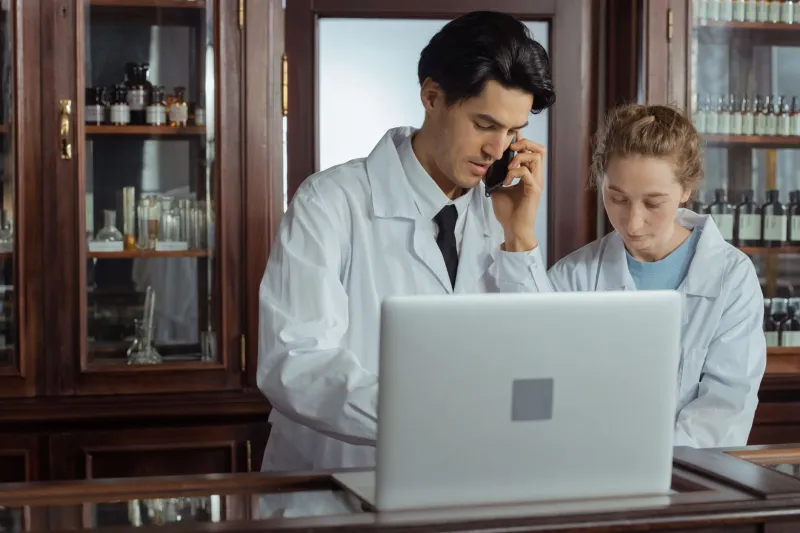
For everyday ailments, your local pharmacy is often the fastest useful stop. Pharmacists can advise on coughs, colds, sore throats, tummy troubles, constipation, thrush, hay fever, aches and pains, skin rashes, and medicine interactions. Many can help through the NHS Pharmacy First service for certain common conditions, without a GP appointment.
They are also good for the 'is this normal?' questions that do not feel like a 999 job but are still niggling at you. No appointment is usually needed, and you can ask to speak privately at the counter.
The GP is for the slower, steadier stuff
Your GP practice is the right place for ongoing problems, medication reviews, referrals, test results, and things that can safely wait a few days. It is not designed for a sudden urgent problem at 11pm. If you are not sure whether something can wait, 111 can help you decide.
Have this ready before you dial
You do not need a full medical file. You just need enough to answer the obvious questions without rummaging through drawers while someone is unwell.
- The person's age and date of birth, plus their NHS number if it is handy.
- The main symptom and when it started.
- Whether it is getting better, worse, or staying the same.
- Any long-term conditions, such as asthma, diabetes or heart problems.
- Medicines they take, including anything bought over the counter.
- Allergies.
- Whether they are pregnant, breastfeeding, or recently had surgery.
- Their temperature, if you have taken it, and whether they are drinking and passing urine normally.
Scripts that make the call easier
For NHS 111, try: 'I am calling about my [relation], [name], aged [age]. Their main problem is [symptom] and it started [when]. It is getting [better/worse/same]. They have [conditions], take [medicines], and are allergic to [allergies]. I am worried because [specific concern]. What should we do next?'
For 999, keep it simple: 'I need an ambulance at [full address]. Someone is [unconscious/not breathing/chest pain]. They are [age], [male/female], and [conscious/unconscious]. I am [name] and I will stay on the line.'
At the pharmacy: 'I have had [symptom] for [how long]. I take [medicines] and I am [pregnant/breastfeeding/asthmatic]. Is this something you can help with, or should I see someone else?'
Helping an older neighbour without overcomplicating it
If you are worried about an older neighbour or relative, start by asking what they want. 'You do not look yourself. Would you like me to sit with you while we ring 111?' is usually better than marching in and taking over.
Put the call on speakerphone so you can both hear, and write down the instructions. Offer to check in later, or to ring their family if they are happy for you to. Do not make decisions for them if they can make them themselves. But if they are confused, struggling to breathe, or have chest pain, do not wait for a relative to arrive before calling 999.
The calm-minute rule
Pause for one minute. Name the main symptom. Ask whether it is immediately life-threatening. Gather the basics. Then ring the right door. Most of the time, the answer is less dramatic than the worry: a pharmacy, a 111 call, a UTC appointment, or a GP call in the morning.
And if you get it wrong? You can always ring back. The NHS is used to people being worried. The important thing is that you asked for help in the first place.