The Kitchen Table Check: Getting Comfortable With Home Blood Pressure
Home blood pressure checks can feel oddly loaded. You are sitting at your own kitchen table, kettle on, cuff wrapped round your arm, waiting for a machine to pronounce judgement. It is easy to treat every reading like a school report. In reality, home monitoring is simply a way of gathering a few useful clues between appointments — not a test you can pass or fail.
Whether your GP has asked you to keep an eye on things or you are just curious about the numbers, the aim is the same: take readings that are as reliable and relaxed as possible, then use them to have a better conversation with a healthcare professional.
Why home readings can be more useful than a one-off
A single reading in a surgery is a snapshot. It can be affected by rushing across town, worrying about the appointment or squeezing into a busy waiting room. Home readings, taken over several days, can give a more rounded picture of what your blood pressure is usually doing.
That does not make home monitoring a replacement for your GP or nurse. It is extra information. Some people find their readings are lower at home than in the clinic; others find the opposite. Either way, a short, tidy record is more helpful than a handful of random numbers scribbled on the back of an envelope.
Picking a monitor without tying yourself in knots
For most people, an upper-arm cuff is the sensible choice. Wrist monitors are convenient but more sensitive to position, so they are not usually the first recommendation unless a healthcare professional has suggested one.
Look for a monitor that has been clinically validated. You do not need to become an expert in specification tables — your pharmacist or GP surgery can point you towards a suitable model. It is also worth checking the cuff size. A cuff that is too small or too large can give misleading readings, so measure your upper arm or ask for advice if you are between sizes.
Buying online is fine, but avoid bargain-bin gadgets with no clear validation information. This is one of those times when boring and reliable beats flashy.
The five-minute setup that makes a difference
Good readings start before you press the button. Sit down and rest for about five minutes first. No phone scrolling, no brisk tidy-up, no heated debate about the washing-up. Just sit.
A few basics help:
- Sit with your back supported and feet flat on the floor. Avoid perching on a stool or crossing your legs.
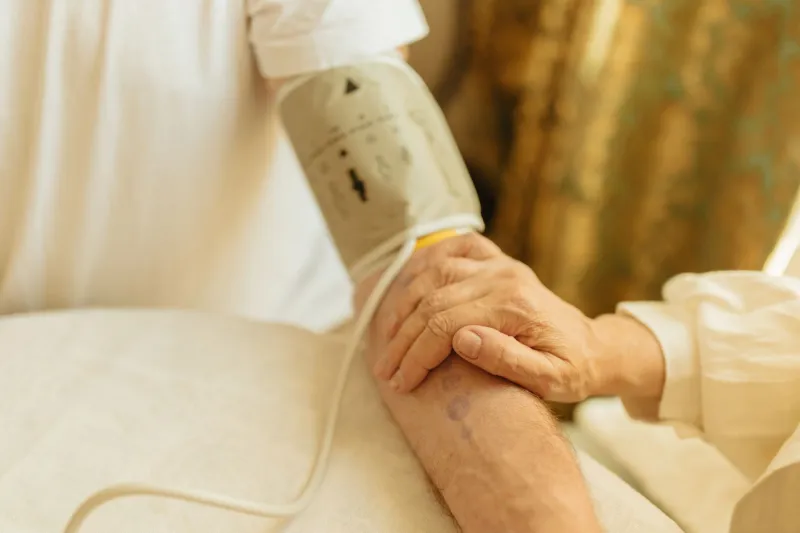
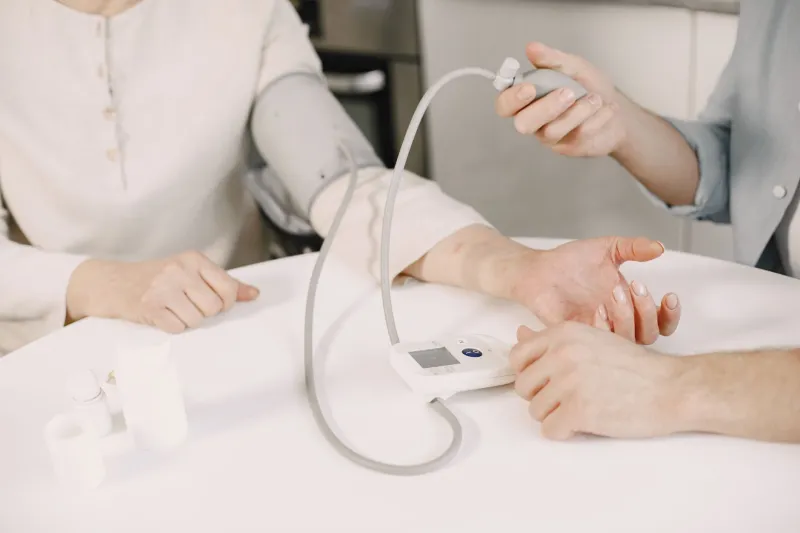
- Rest your arm on a table so the cuff is roughly at heart level. Let your arm go floppy rather than holding it up.
- Use a bare upper arm. A sleeve rolled up tightly can act like a tourniquet and skew the result.
- Put the cuff on the correct arm if you have been told to use one in particular. Otherwise, pick an arm and stick with it.
- Do not talk during the reading. Chatting, even on the phone, can nudge the numbers up.
- Empty your bladder first. A full bladder is not a friend to accurate readings.
Take two readings, about a minute apart, and write them down. Some monitors store readings automatically, which is handy, but a simple notebook works perfectly well. If your GP has asked for a week of readings, follow their instructions about when to take them — often morning and evening.
What the numbers are actually saying
The top number is systolic pressure — the pressure when your heart pushes blood out. The bottom number is diastolic pressure — the pressure when your heart relaxes between beats. You will see them written like 128/78, spoken as 128 over 78.
For home monitoring, NHS guidance often uses a target of below 135/85 for adults, but your own target may be different. Age, other health conditions and medicines all matter. Do not compare your numbers to a neighbour's or to a headline you half-remember. Ask your GP or pharmacist what range they are looking for in your case.
One high reading is not a diagnosis. Blood pressure naturally moves around during the day. What matters is the pattern over several readings, taken in similar conditions. If you are getting numbers that worry you, resist the urge to keep re-testing every five minutes. That tends to create more anxiety, not more clarity.
Little things that can push a reading up
Even a good monitor can give a misleading result if the setup is off. Common culprits include:
- A cuff that is too tight, too loose or the wrong size.
- Talking, texting or watching something tense during the reading.
- Sitting with your arm unsupported or below heart level.
- Having caffeine, a cigarette or vigorous exercise in the half hour before checking.
- Taking a reading when you are rushed, cold or bursting for the loo.
- Using a wrist monitor without following the exact positioning instructions.
If a reading looks wildly out of line with your usual numbers, do not panic. Check your setup, rest for a few minutes and try again. If it is still very high, or you feel unwell, seek advice.
When to stop guessing and ask for help
Home monitoring is useful, but it is not a DIY diagnosis kit. Speak to your GP, practice nurse or pharmacist if your readings are consistently above the range you have been given, if they are bouncing around unpredictably, or if you are unsure what to do with the numbers.
Do not change or stop any blood pressure medicine on your own. That is a conversation to have with the person who prescribed it.
Seek urgent help if you have a very high reading and feel unwell — for example, severe headache, chest pain, breathlessness, vision changes, weakness or difficulty speaking. If you think you are having a medical emergency, call 999. For urgent advice when it is not an emergency, NHS 111 can guide you.
A routine you can live with
Home blood pressure checking works best when it becomes ordinary. Same chair, same arm, same rough time of day. Keep the cuff somewhere sensible, keep a simple record and do not let the machine rule your morning.
The point is not to become a full-time numbers-watcher. It is to give yourself and your healthcare team a clearer picture — and to feel a bit more in charge of your own health along the way.