Bleach, Bin Bags and the 48-Hour Rule: A Calm Norovirus Guide for UK Kitchens
Norovirus rarely announces itself politely. One minute someone’s fine; the next, a child is hovering near the bathroom door and you’re hunting for the bucket. In UK homes, the winter vomiting bug can move through a family faster than a cold. The good news? You don’t need a forensic-level deep clean or a cupboard full of expensive products. You need a few boring, reliable habits — and a cool head.
The short version, before we get into the weeds
Norovirus spreads through tiny amounts of vomit or poo. It can hitch a ride on hands, door handles, worktops, taps and food. It is not a judgement on your housekeeping. Alcohol hand gel is not much use against it; soap and water is. Cleaning and disinfecting are different jobs. And the 48-hour rule — staying off work, school or nursery until two full days after symptoms stop — is one of the most useful things you can do for everyone else.
Why the kitchen gets the starring role
You might think of norovirus as a bathroom bug, and it certainly likes a loo. But the kitchen is where hands, food and surfaces meet in a hurry. Someone pops a snack back in the fridge after using the bathroom. A tea towel does double duty. A sponge wipes a worktop and then sits by the sink, damp and ready for the next round.
That’s why a calm reset matters more than a frantic one. The aim isn’t to scrub every skirting board. It’s to break the little chains of contact that let a bug travel from one person to the next.
Soap and water first — the gel can wait
Alcohol gel has its place, especially when you’re out and about. But norovirus is a stubborn customer. It doesn’t have the fatty outer layer that alcohol gels are good at breaking down, so a quick squirt is not a reliable stand-in for handwashing. Soap and water does the job by lifting the germs off your skin and sending them down the plughole.
In practice: wash hands after the bathroom, before food, after changing a nappy, after cleaning up vomit or diarrhoea, and after handling dirty laundry. Use warm water and soap, and take the time to do the whole hand — thumbs, fingertips, between the fingers. Dry them properly. If you’re out and about with no sink in sight, gel is better than nothing, but it’s not the first choice at home.
Cleaning versus disinfecting — they’re not the same thing
This is the bit that trips people up. Cleaning means removing dirt, grease and visible mess. Disinfecting means killing germs. You usually need to do the first before the second, because a dirty surface stops the disinfectant doing its job.
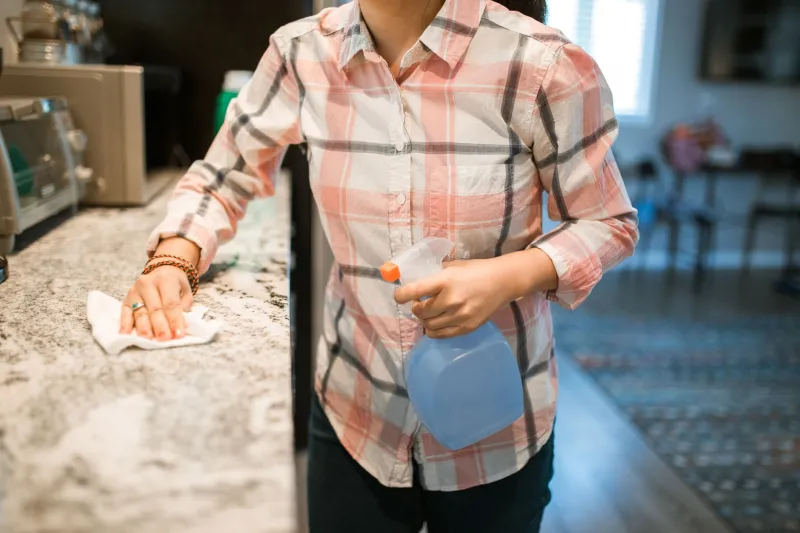
For a worktop or highchair tray: wash it with hot soapy water, rinse, then use a bleach-based household disinfectant or a diluted thin bleach solution made up to the label’s instructions. Leave it wet for the contact time on the bottle — often a few minutes — then rinse if the label says so. Don’t mix bleach with other cleaners, especially anything containing ammonia, and open a window.
Soft things deserve a mention too. Tea towels, flannels and bedding from anyone who’s been ill should go through a hot wash if the fabric allows. Wash your hands after loading the machine, and don’t shake dirty laundry around the room.
The 48-hour rule, in plain English
Norovirus is most contagious while someone has symptoms and for a little while after. The standard UK advice is to stay away from work, school, nursery or childcare until you’ve been free of vomiting and diarrhoea for 48 hours. That’s two full days after the last episode, not two days after the first.
It can feel like a lot when you’re juggling a job or childcare. But those 48 hours are one of the kindest things you can do for colleagues, classmates and anyone vulnerable. It also applies to preparing food for other people: don’t cook for others until 48 hours after your symptoms stop. And if you can, avoid visiting hospitals or care homes during that time, even if you feel better.
Bathroom habits that punch above their weight
Close the lid before you flush. It sounds small, and it is, but it helps keep tiny particles from taking a tour of the room. Use separate towels, or at least change them often. Keep a bin for used tissues and wipes, and empty it regularly. Clean the flush handle, taps, door handles and light switch — the spots hands touch without thinking.
If someone is ill, a dedicated bathroom if you have one is ideal, but most of us don’t. In that case, keep the routine simple: clean the loo and surrounding surfaces with detergent, then disinfect, and wash your hands afterwards. Wear gloves if you have them, and put them and any paper towels straight into a bin bag.
When to ring 111 rather than ride it out
Most people get through norovirus with rest and fluids. The main risk is dehydration, especially for babies, young children, older people and anyone who is pregnant or has a long-term condition.
Ring 111 if you’re worried, or if someone:
- can’t keep fluids down
- hasn’t had a wee for several hours
- feels dizzy or light-headed when standing
- has blood in their vomit or poo
- has a high temperature that won’t settle
- is a baby or young child with fewer wet nappies
Use 999 if someone is unresponsive, has a fit, has severe difficulty breathing, or you think it’s an emergency. Trust your instincts — you know your household best.
A calm reset, not a marathon
Norovirus is unpleasant, but it is usually short. You don’t need to turn your home upside down. Wash hands with soap and water, clean before you disinfect, give the bathroom and kitchen the once-over, and respect the 48-hour rule. Keep fluids going, rest when you can, and ring 111 if something doesn’t feel right. That’s a sensible plan — no panic required.